
Site Nº 001 · Cretaceous Apex Predator
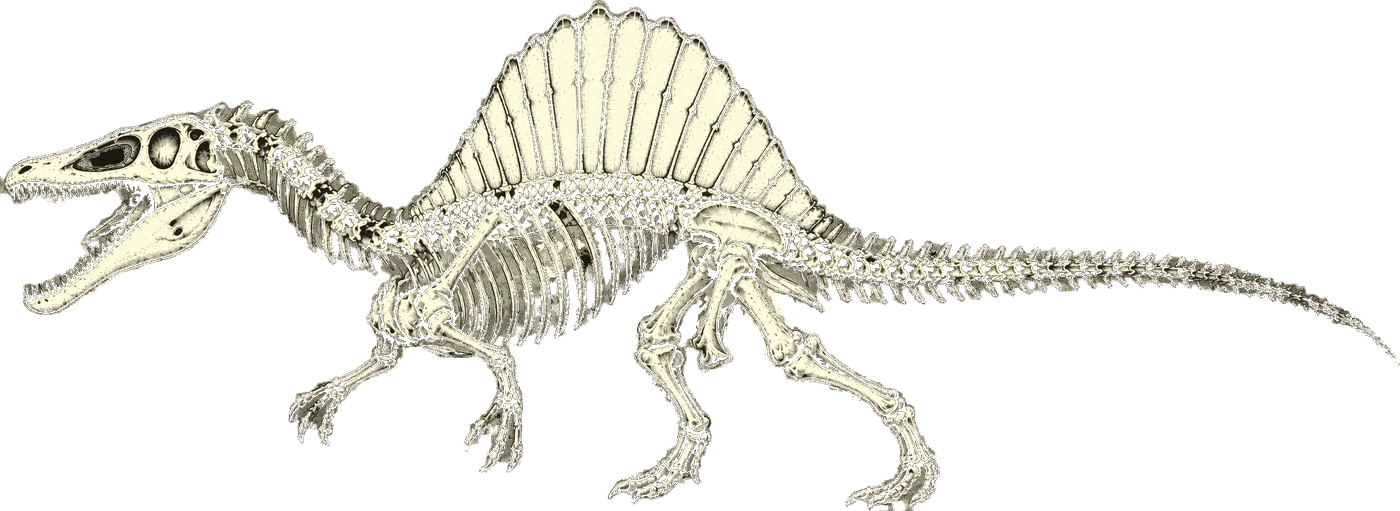
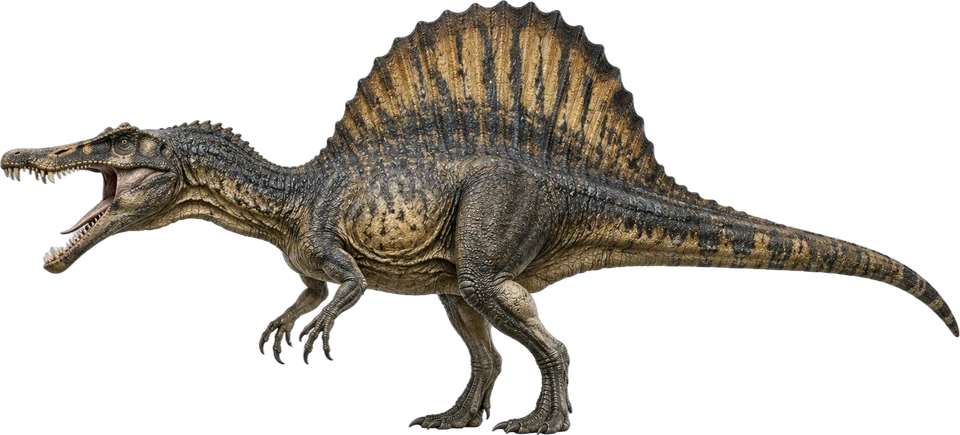
Spinosaurus aegyptiacus, life reconstruction

Gallery 002 · Hall of Spinosauridae

Spinosaurus

aegyptiacus, the sail-backed river giant

The largest predatory dinosaur ever found, and the strangest: a fish-eater the length of a bus that may have hunted in the water. This is its record, read straight from the bones.

Scroll to enter the hall
0 m

Longest predatory dinosaur known

Sereno et al., 2022

0 t

Estimated body mass

≈7.4 t, Sereno et al., 2022

>0.0 m

Tallest sail spines

Ibrahim et al., 2014

0

First bones found, Egypt

Named by Stromer, 1915

Plate I · Osteology

A predator like no other

No other giant meat-eater was built like this. Uncover each feature to see why so many researchers read this skeleton as a river animal, and why the argument still runs.

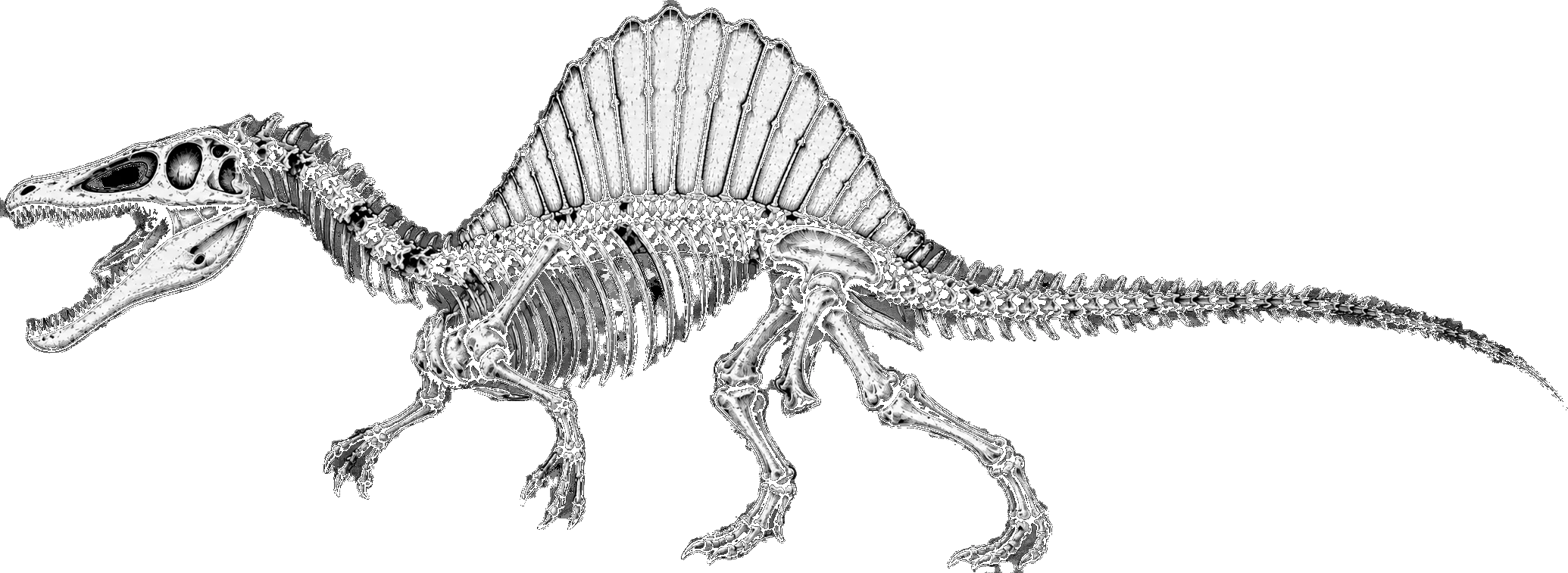
Spinosaurus aegyptiacus skeleton, lateral reconstruction with anatomy labelled
05 m10 m15 m

Amber tick = a 1.8 m person, for scale

Uncover the anatomy

0 / 5 found

Plate II · The open question

Swimmer, or wader?

Since 2014, Spinosaurus has split the field. Everyone agrees it ate fish and lived at the water’s edge. The fight is over how deep it went.

Case for the swimmer

It chased fish underwater

The deep, fin-shaped tail (Ibrahim et al., 2020), retracted nostrils and unusually dense bones (Fabbri et al., 2022) describe an animal shaped for active, tail-driven pursuit beneath the surface.

VS

Case for the wader

It fished from the bank

Buoyancy and stability models (Henderson, 2018) and later studies (Hone & Holtz, 2021; Sereno et al., 2022) argue it would have bobbed and rolled in deep water, and likely hunted the shallows like a giant heron.

The settled part: conical teeth, a long snout and fish scales found with spinosaurid remains leave little doubt that fish were the main course. Only the diving is in dispute.

Plate III · Field notes
No. 01 · SizeHoverFig. 02

How big was Spinosaurus?

A 2022 study led by palaeontologist Paul Sereno put Spinosaurus aegyptiacus at about 14 metres long and 7.4 tonnes, still the longest predatory dinosaur ever found, ahead of both T. rex and Giganotosaurus.

14metresSereno et al., 2022
No. 02 · vs T. rexHoverFig. 03

Was Spinosaurus bigger than T. rex?

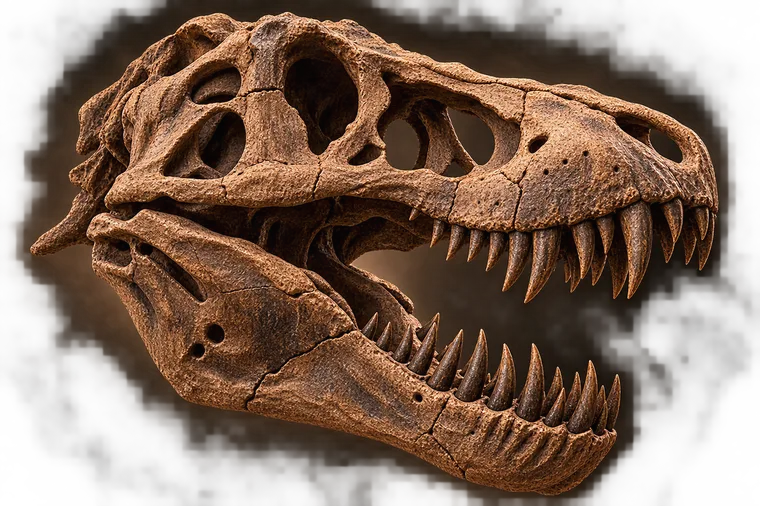
In length, yes. Spinosaurus stretched to about 15 metres against roughly 12 metres for T. rex, though T. rex was heavier, more powerfully built and bit far harder.

Spinosaurus15 m
T. rex12 m
Full comparison
No. 03 · AquaticHoverFig. 04

Did Spinosaurus swim?

Probably, at least in part. A deep, fin-like tail (described in 2020), unusually dense bones and a fish-catching snout all point to a life in and around water. Whether it actively swam after prey or waded and fished from the shoreline is still fiercely debated.

No. 04 · DietHoverFig. 05

What did Spinosaurus eat?

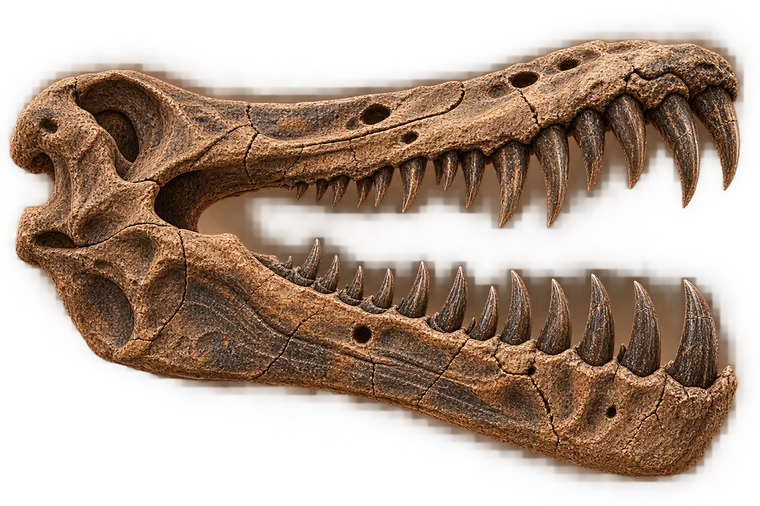
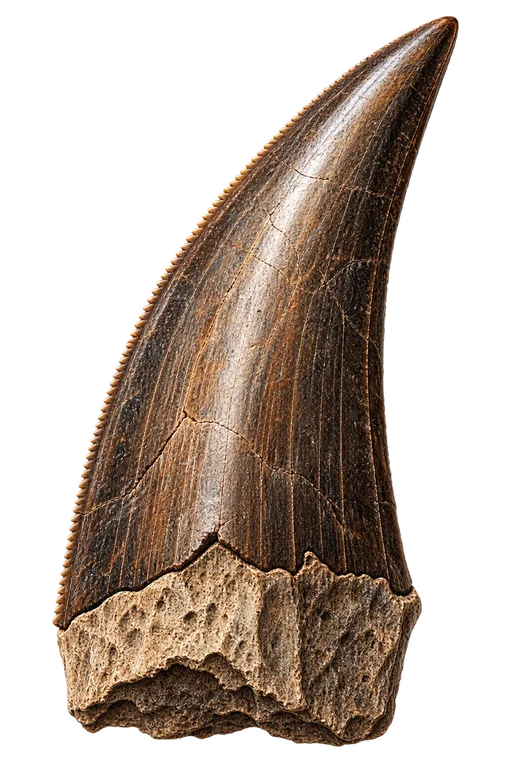
Mostly fish. Long jaws, straight conical teeth and pressure-sensing pits at the snout let it grip slippery prey in murky water, much like a crocodile, plus smaller prey and carrion.

No. 05 · The sailHoverFig. 06

What was the sail on its back for?

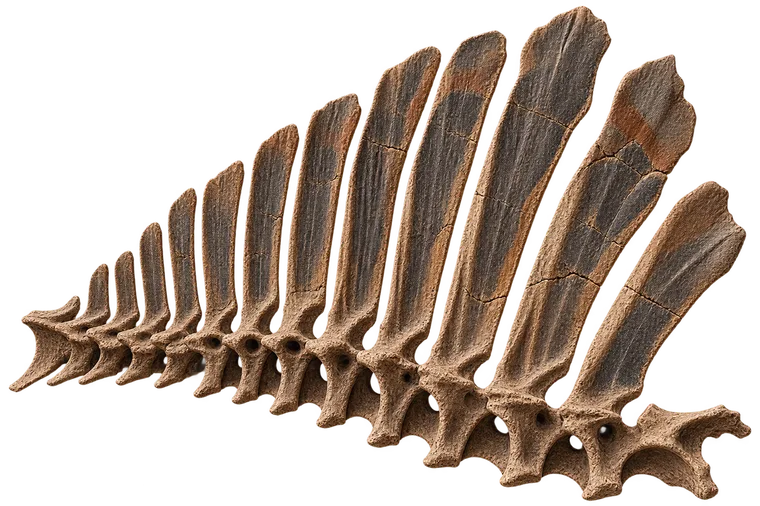
No settled answer. Neural spines over 1.6 m tall, bound in skin, formed the sail. Display and species recognition lead the theories, with heat regulation and fat storage also proposed.

No. 06 · DiscoveryHoverFig. 07

Where was Spinosaurus found?

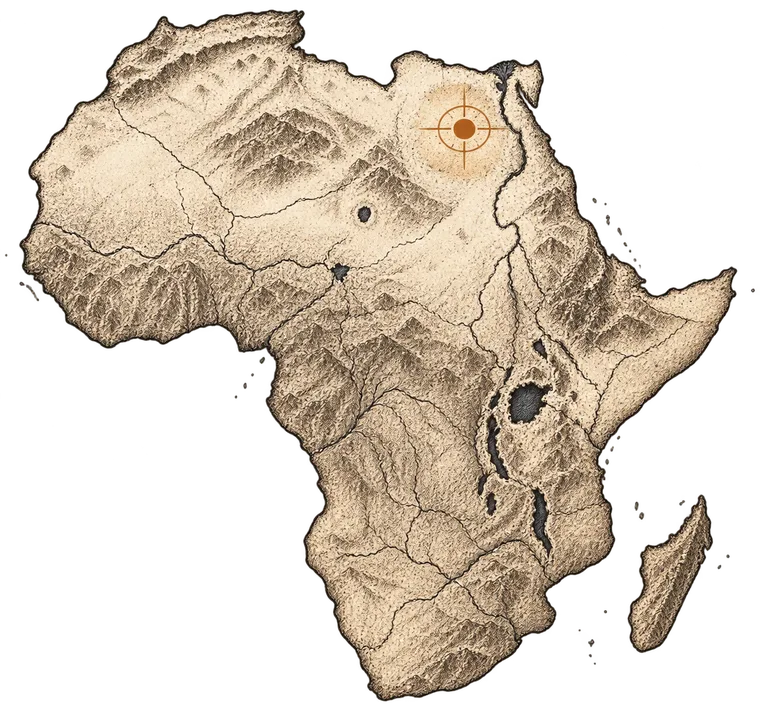
In North Africa, chiefly the Kem Kem beds of Morocco and the Bahariya Formation of Egypt, where Ernst Stromer unearthed the first bones in 1912 and named the animal in 1915.

No. 07 · SpeedHoverFig. 08

How fast was Spinosaurus?

Not a sprinter. Its short hind limbs suited wading and swimming rather than chasing prey across land, so it likely relied on ambush and quick bursts near the water.

No. 08 · WhenHoverFig. 09

When did Spinosaurus live?

During the Cenomanian age of the Cretaceous, roughly 99 to 93 million years ago, tens of millions of years before Tyrannosaurus rex ever appeared.

Plate IV · Identification

Specimen record

Spinosaurus aegyptiacus

“Spine lizard” · the sail-backed river giant

Classification
Theropoda › Spinosauridae
Described
Ernst Stromer, 1915
Age
Cenomanian, ~99 to 93.5 Ma
Holotype
IPHG 1912 VIII 19 (lost 1944)
Neotype
FSAC-KK 11888 (Ibrahim, 2014)
Length
~14 to 15 m (46 to 49 ft)
Mass
~7 t (estimates vary)
Diet
Piscivore, mostly fish
Range
N. Africa (Morocco, Egypt)
Plate V · Field library

References

Peer-reviewed sources

  1. 01Stromer, E. (1915). Ergebnisse der Forschungsreisen … Spinosaurus aegyptiacus.
  2. 02dal Sasso, C. et al. (2005). New information on the skull of Spinosaurus. JVP.
  3. 03Ibrahim, N. et al. (2014). Semiaquatic adaptations in a giant predatory dinosaur. Science.
  4. 04Ibrahim, N. et al. (2020). Tail-propelled aquatic locomotion in a theropod. Nature.
  5. 05Hone, D. & Holtz, T. (2021). Evaluating the ecology of Spinosaurus. Palaeontologia Electronica.
  6. 06Fabbri, M. et al. (2022). Subaqueous foraging among carnivorous dinosaurs. Nature.
  7. 07Sereno, P. et al. (2022). Spinosaurus is not an aquatic pursuit predator. eLife.

Continue the tour