
Built for water, not sprinting
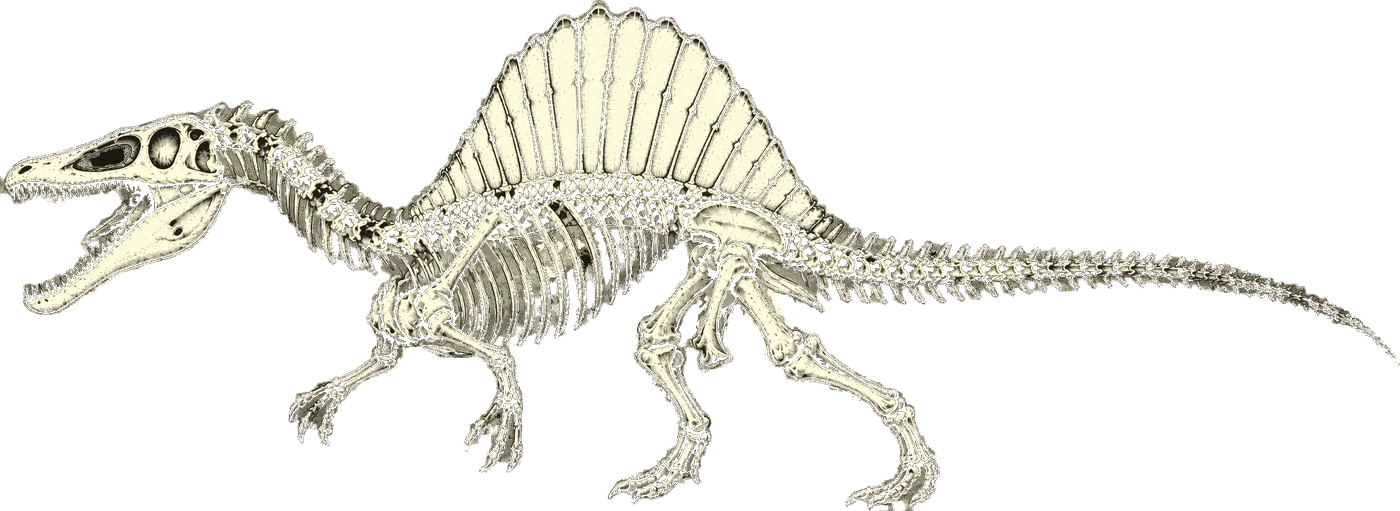
Fast-running dinosaurs tend to have long, slender hind limbs. Spinosaurus is the opposite: the 2014 skeleton shows relatively short hind legs, and its bones were unusually dense and heavy, adaptations linked to life in water rather than running on land.
That heavy, low-slung build means Spinosaurus was almost certainly a slow mover on land, well behind leggy pursuit hunters like Tyrannosaurus rex. There is no reliable top-speed figure for it, but a walking or slow trotting pace is the realistic picture.
Faster in the water
Where Spinosaurus really moved was in the water. The deep, paddle-shaped tail described in 2020 could sweep side to side to drive it forward, much like a crocodile or a newt. So while it lumbered on land, it was likely an efficient swimmer.
How it caught prey
A slow land predator does not chase down fast prey, and Spinosaurus did not need to. It hunted fish in and around rivers, using ambush, its long jaws and pressure-sensing snout to grab prey in the water rather than running it down.