
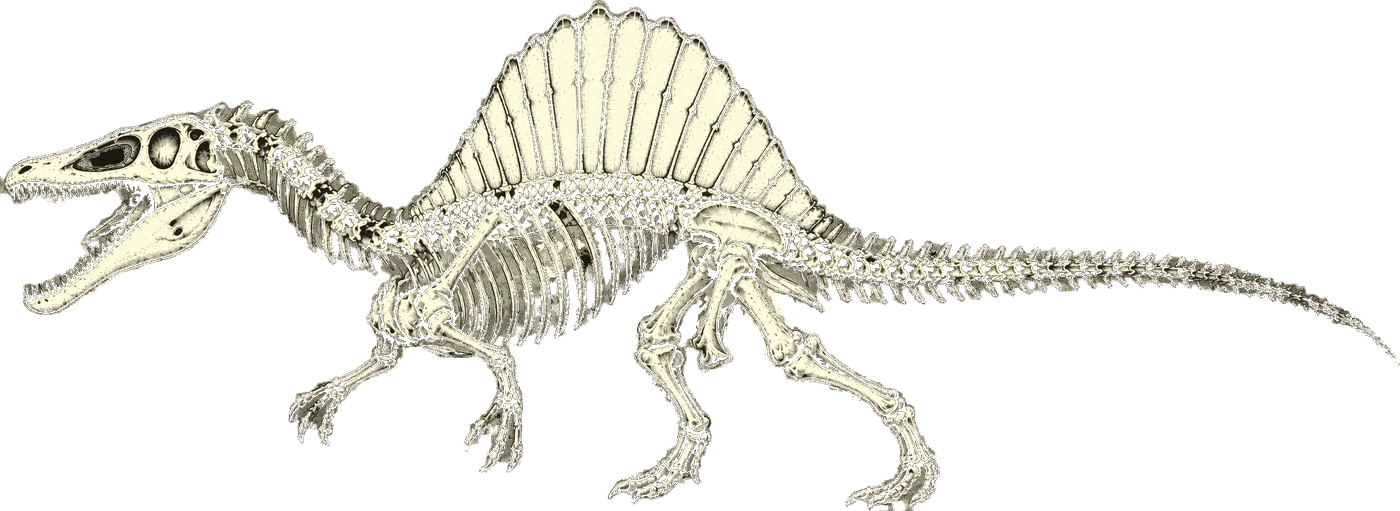
A real, named dinosaur
Spinosaurus aegyptiacus was described by the German palaeontologist Ernst Stromer in 1915, from bones his team uncovered in the Bahariya Oasis of Egypt starting in 1912. The name means spine lizard, after the tall spines that formed its sail.
It is recognised by scientists worldwide as the largest predatory dinosaur ever found, longer than Tyrannosaurus rex.
The bones that were lost, then found again
Stromer's original fossils were kept in Munich. On the night of 24 to 25 April 1944, a Second World War air raid destroyed the museum and the only Spinosaurus skeleton on Earth was lost. For decades, all that survived were Stromer's drawings.
Then new bones surfaced in the Kem Kem beds of Morocco. In 2014 Nibras Ibrahim and colleagues described a new partial skeleton (the neotype, FSAC-KK 11888), and in 2020 the same team reported its remarkable paddle-shaped tail.
More than a movie monster
Spinosaurus does appear in Jurassic Park III, in games like ARK and in countless documentaries, but those are based on a genuine prehistoric animal. Real fossils, from teeth and claws to the famous sail spines, are held in museums today.